NHL Entry Draft: Exclusive Negotiation Rights
How long do NHL Teams control a player's rights after the draft?

As each NHL regular season winds down, a familiar question resurfaces: How long does a team retain the rights to a player it has previously drafted? While this issue often centres around college stars who opt not to sign with the team that selected them - think Jimmy Vesey, Adam Fox and potentially Isaac Howard after next season - it’s governed by a broader set of rules. In this post, I take a closer look at how long NHL teams retain these rights in various scenarios, as outlined in Article 8 of the CBA.
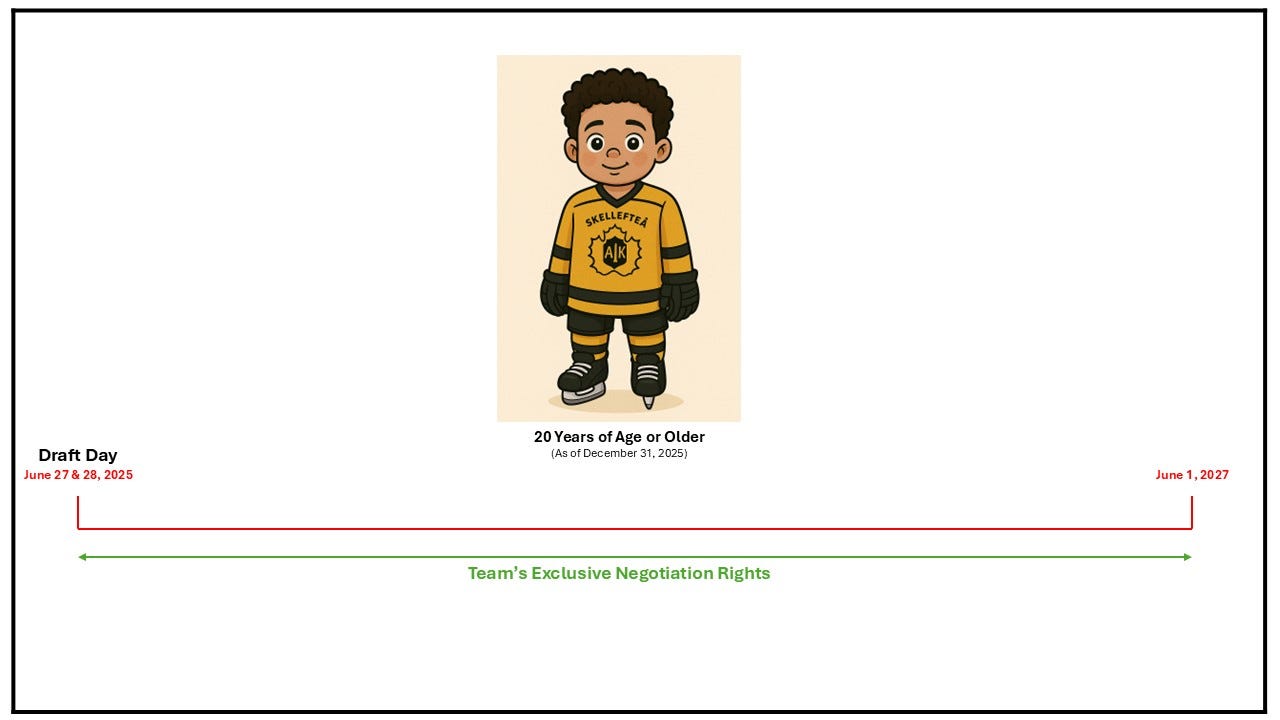
To make things easier, I have included timelines using this year’s Draft as a reference.
As a general rule, an NHL team holds the exclusive right to negotiate with a drafted player from the date of selection through June 1 of the following year. If the team offers the player a contract on or before that June 1 deadline, they retain exclusive rights for one additional year, extending through June 1 of the second year after the draft.
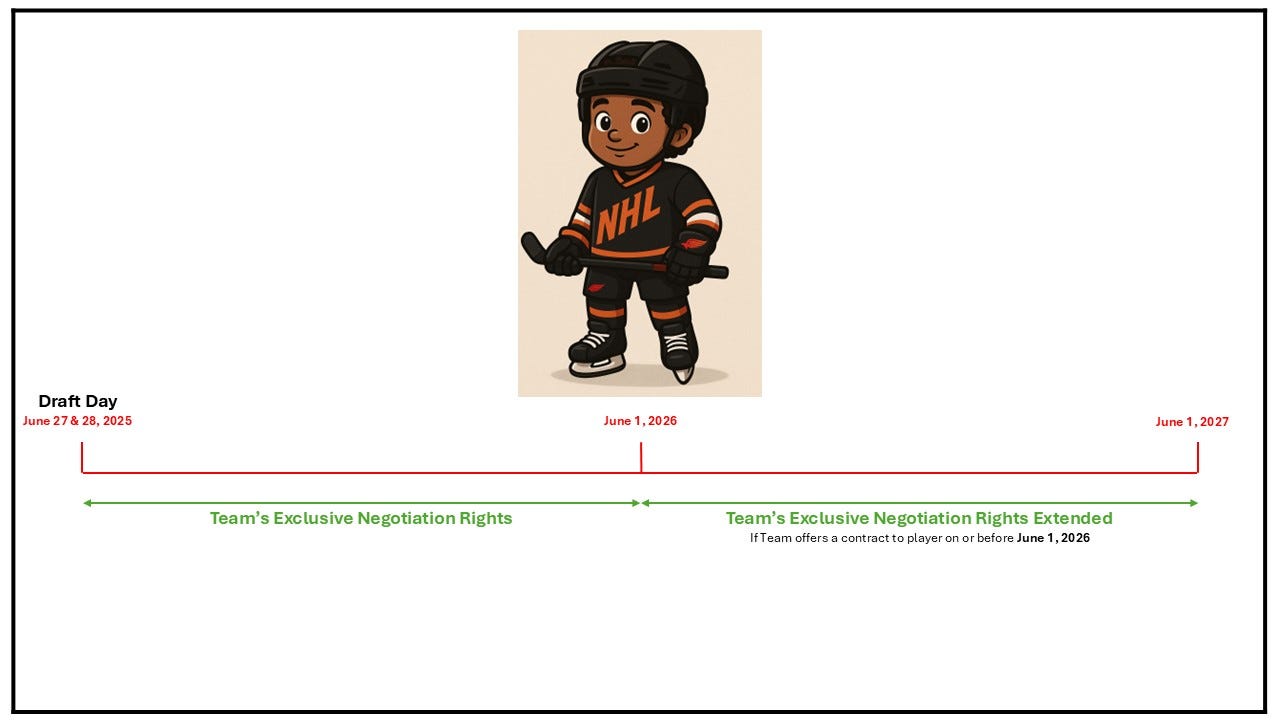
In some cases, NHL teams can retain a player’s rights beyond the standard period, depending on the player’s age at the time of the draft, the league they were in, or where they play in the years that follow.
For reference below:
Age 18 = 18 by September 15 of the draft year
Age 19 = 19 by September 15 of the draft year
Age 20 = 20 by December 31 of the draft year
PLAYERS DRAFTED OUT OF MAJOR JUNIOR HOCKEY (WHL, OHL, QMJHL)
This also applies to players who play Major Junior while a team holds their exclusive negotiating rights, excluding those who played college hockey or were drafted from a team outside of North America.
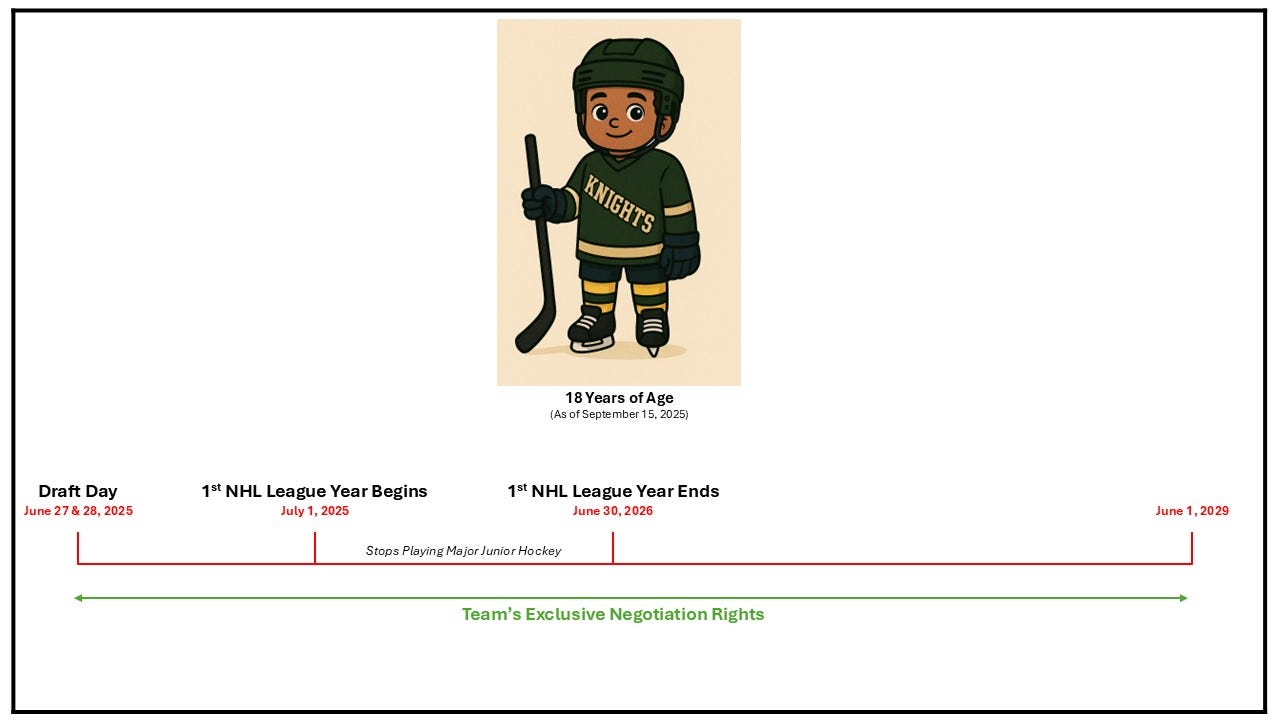
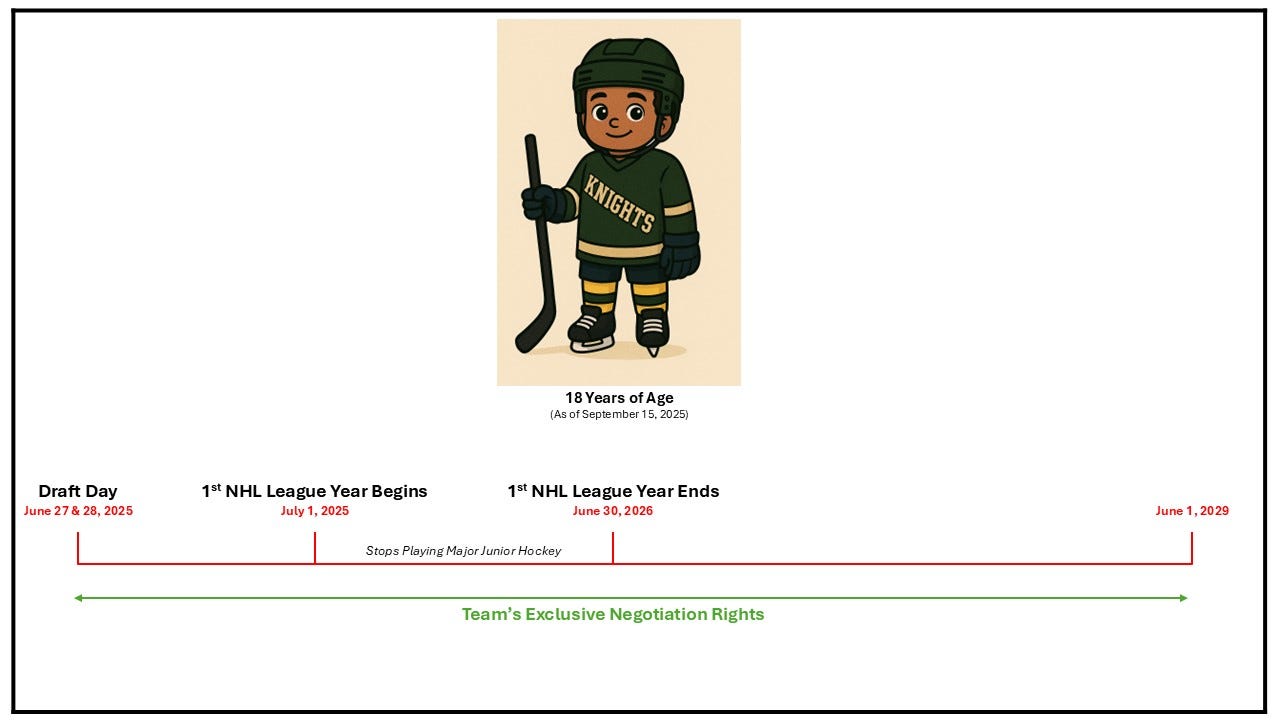
A team will retain the exclusive negotiation rights to a player that they have drafted until June 1 of the fourth year following the draft if:
the player is drafted at age 18 ; and
the player stops playing Major Junior during the first NHL League Year after being drafted.
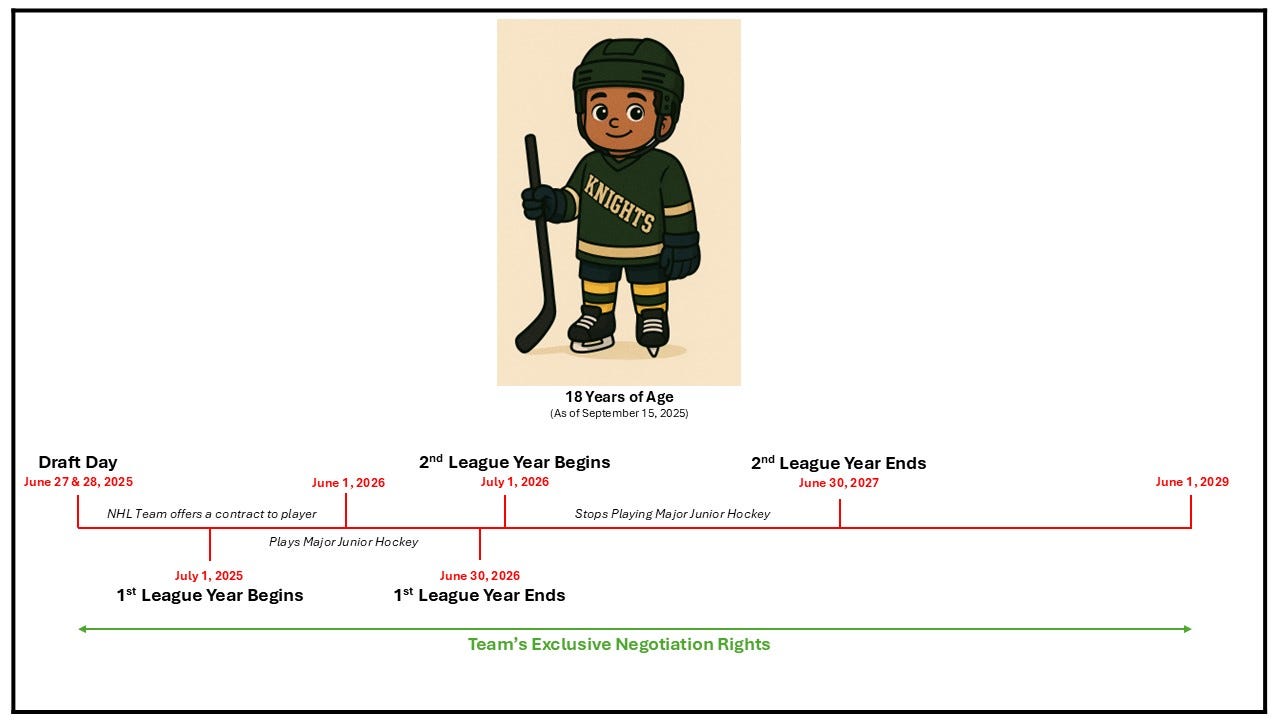
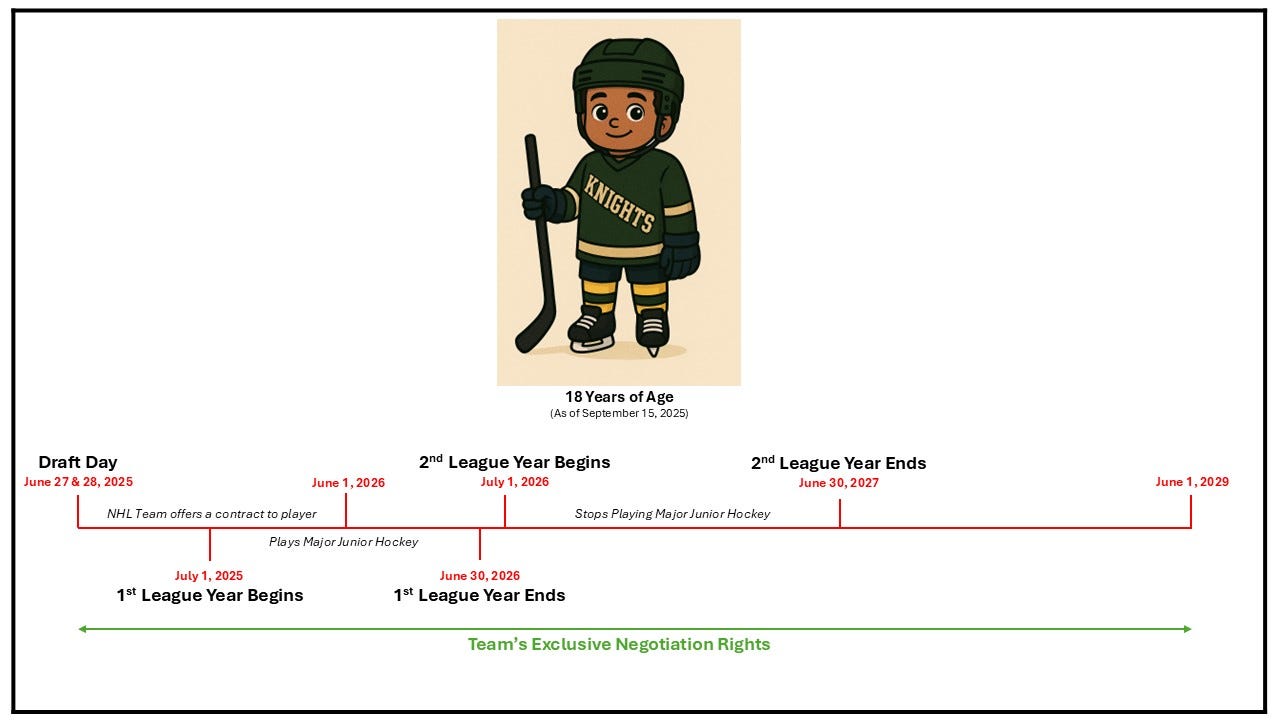
A team will retain the exclusive negotiation rights to a player that they have drafted until June 1 of the fourth year following the draft if:
the player is drafted at age 18;
the player stops playing Major Junior during the second NHL League Year after being drafted; and
the team makes a contract offer by June 1 of the year after the draft.
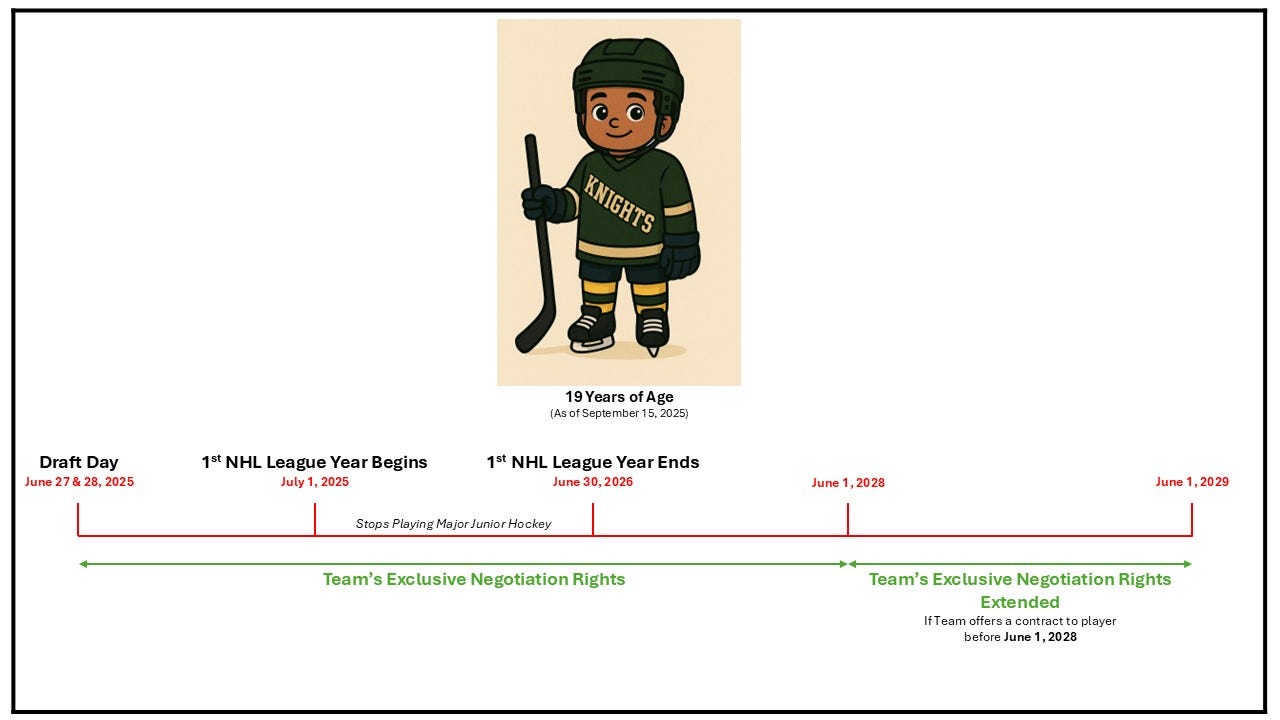
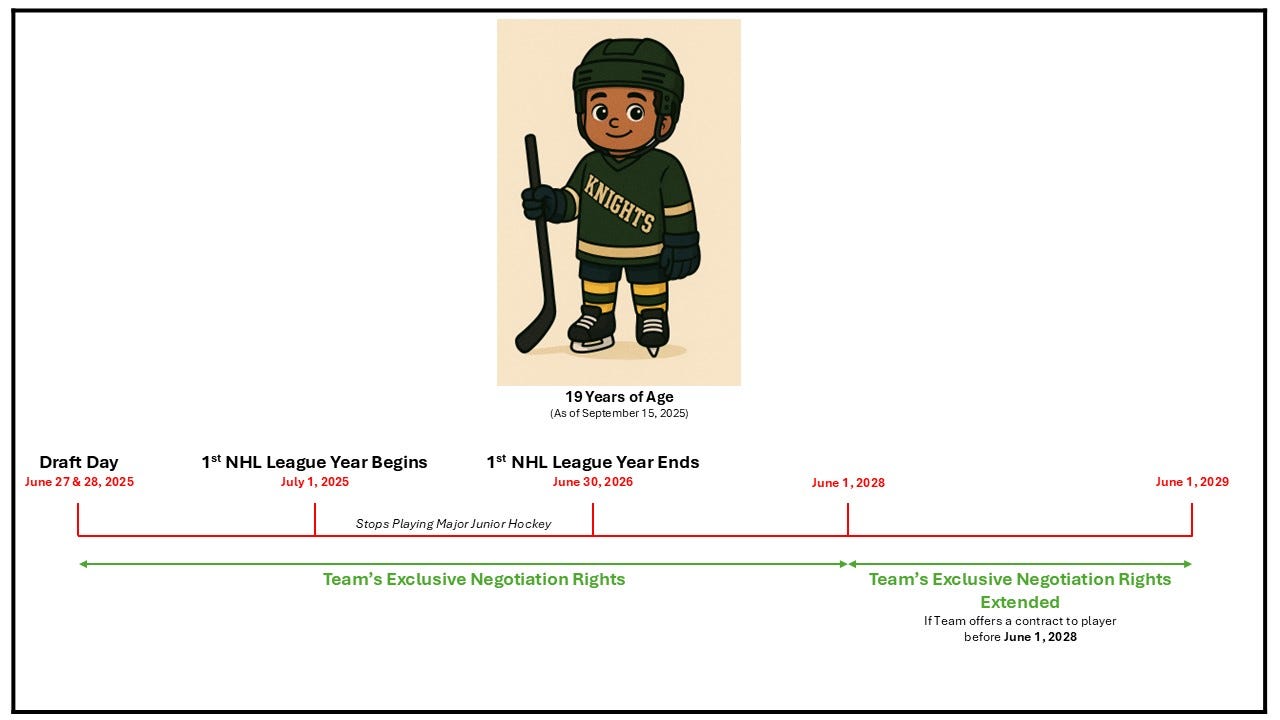
A team will retain the exclusive negotiation rights to a player that they have drafted until June 1 of the third year following the draft if:
the player is drafted for the first time at age 19; and
the player stops playing Major Junior during the first NHL League Year after being drafted.
This can be extended to a fourth year if the team offers the player a contract before June 1 of the third year following the draft.
COLLEGE PLAYERS
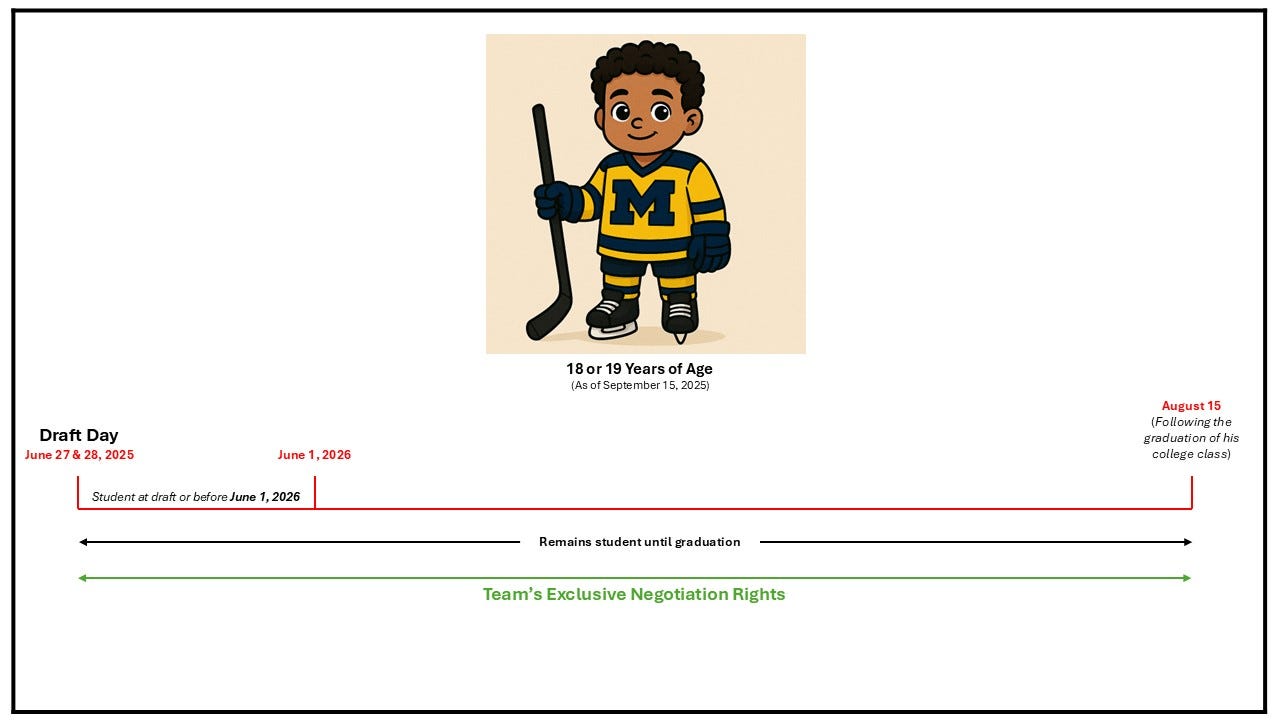
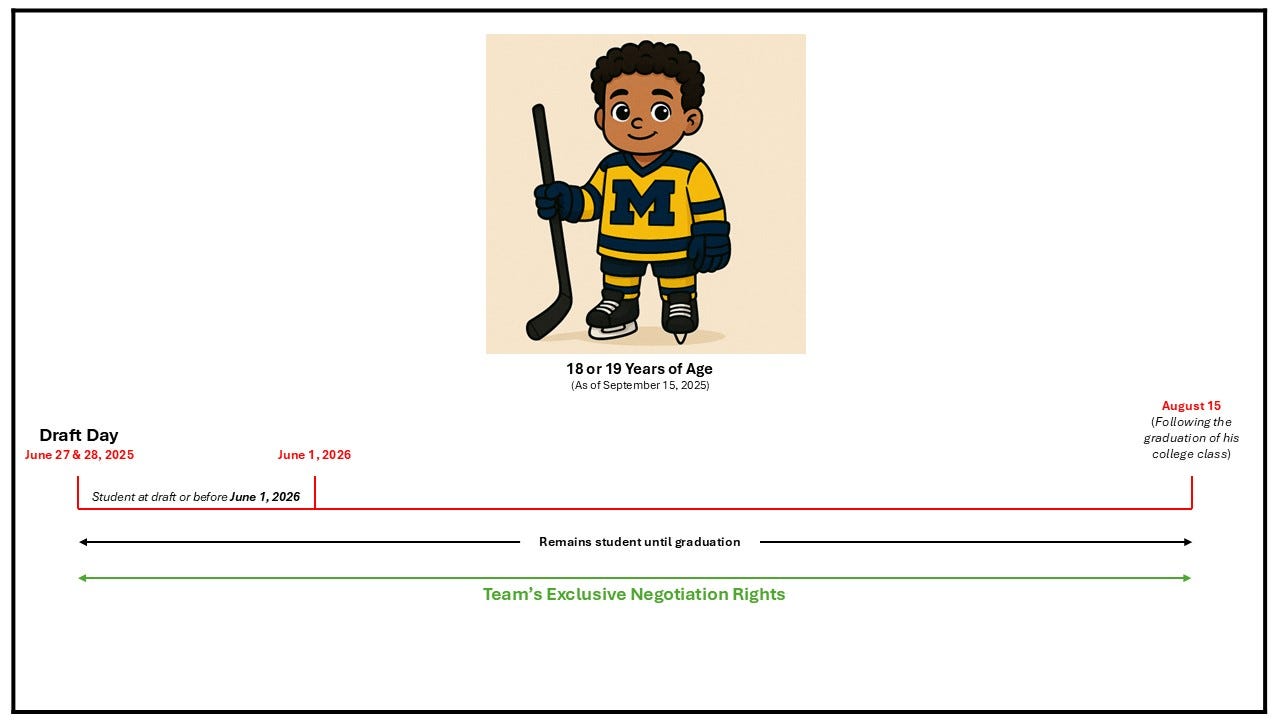
A team will retain the exclusive negotiation rights to a player that they have drafted until August 15 following the graduation of his college class if:
the player is drafted at age 18 or 19;
the player is a college student at the time of the draft or before the first June 1 following the draft; and
the player remains a college student through the graduation of his college class.
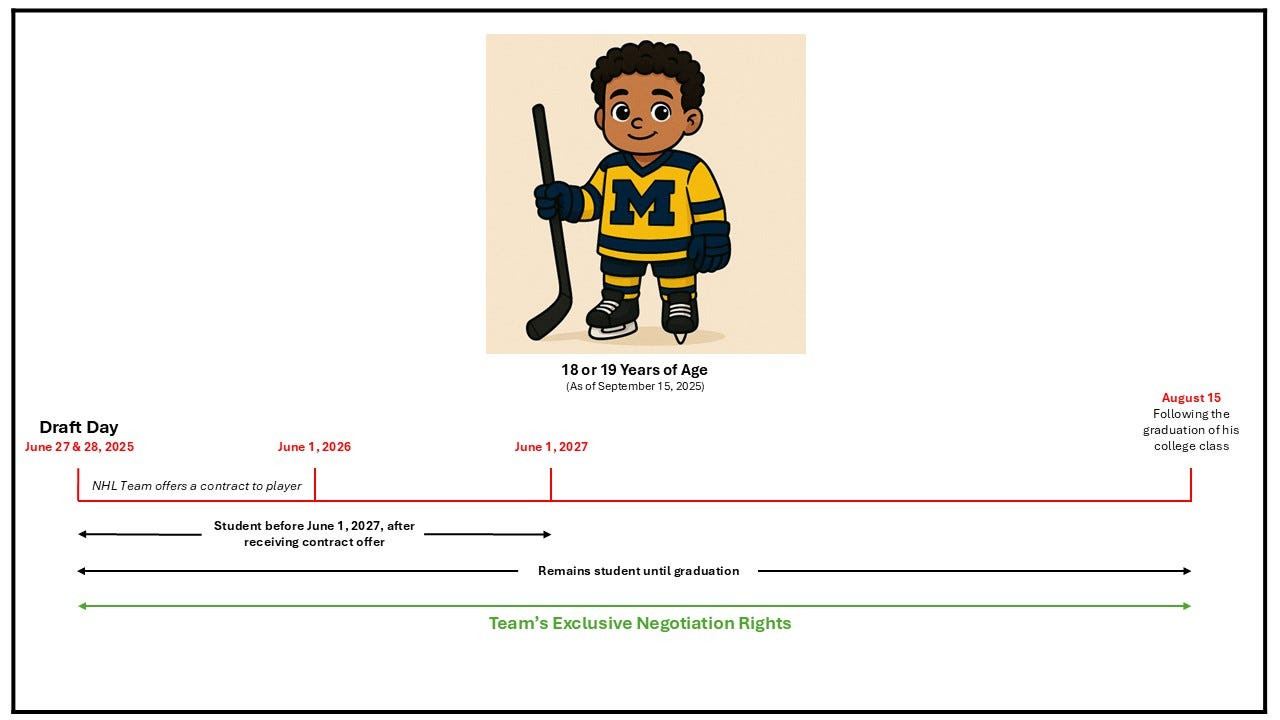
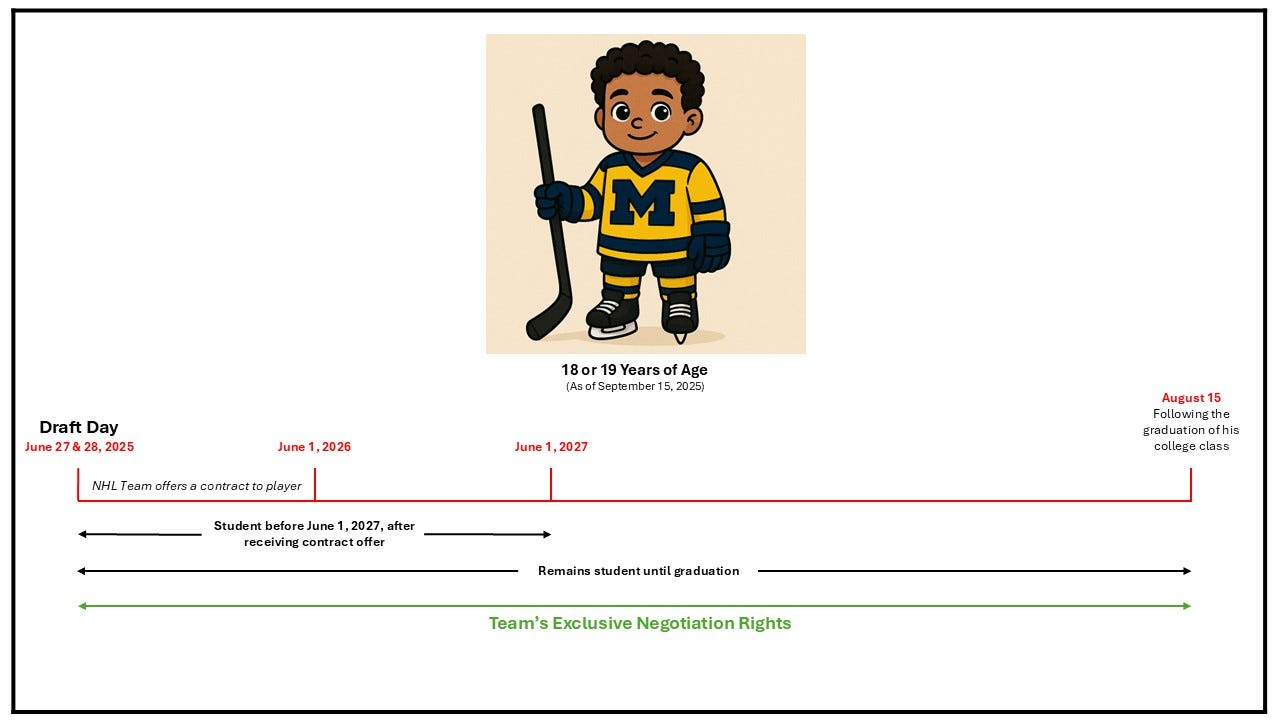
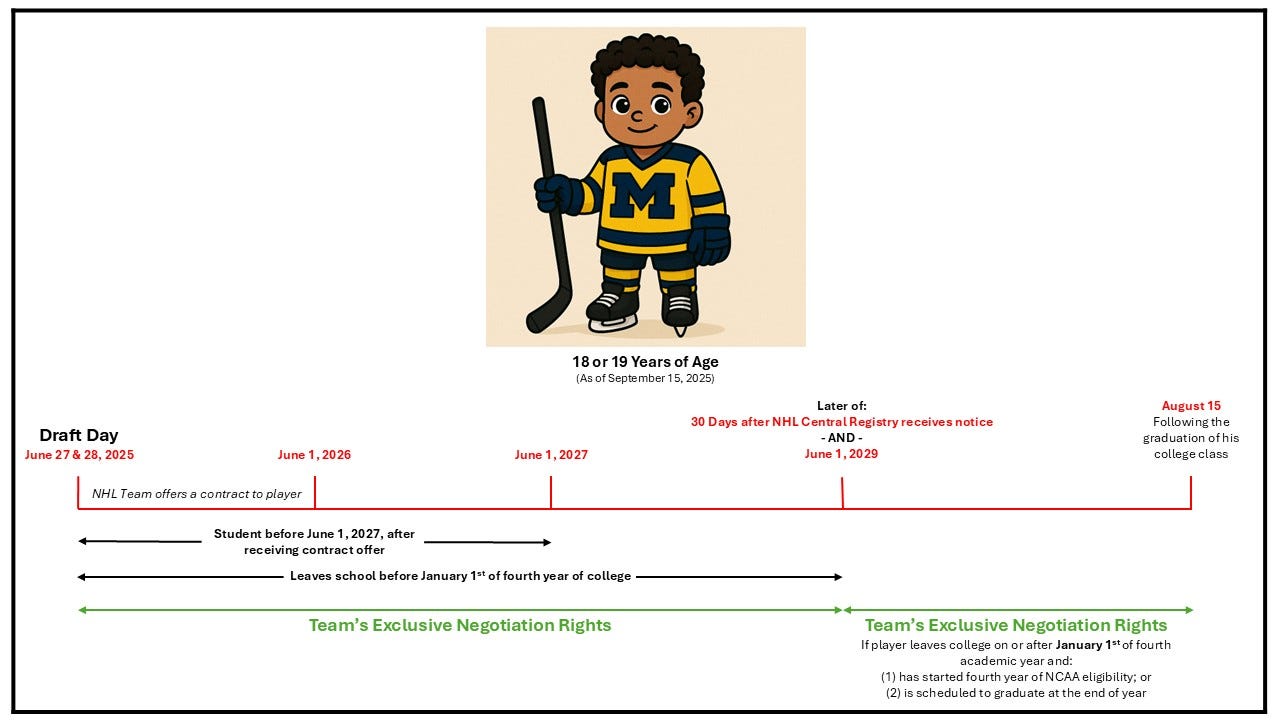
A team will retain the exclusive negotiation rights to a player that they have drafted until August 15 following the graduation of his college class if:
the player is drafted at age 18 or 19;
the team had made a contract offer by June 1 of the year after the draft;
the player becomes a college student before the second June 1 following the draft; and
the player remains a college student through the graduation of his college class.
What happens if the player leaves college early or is drafted at age 20 or older?
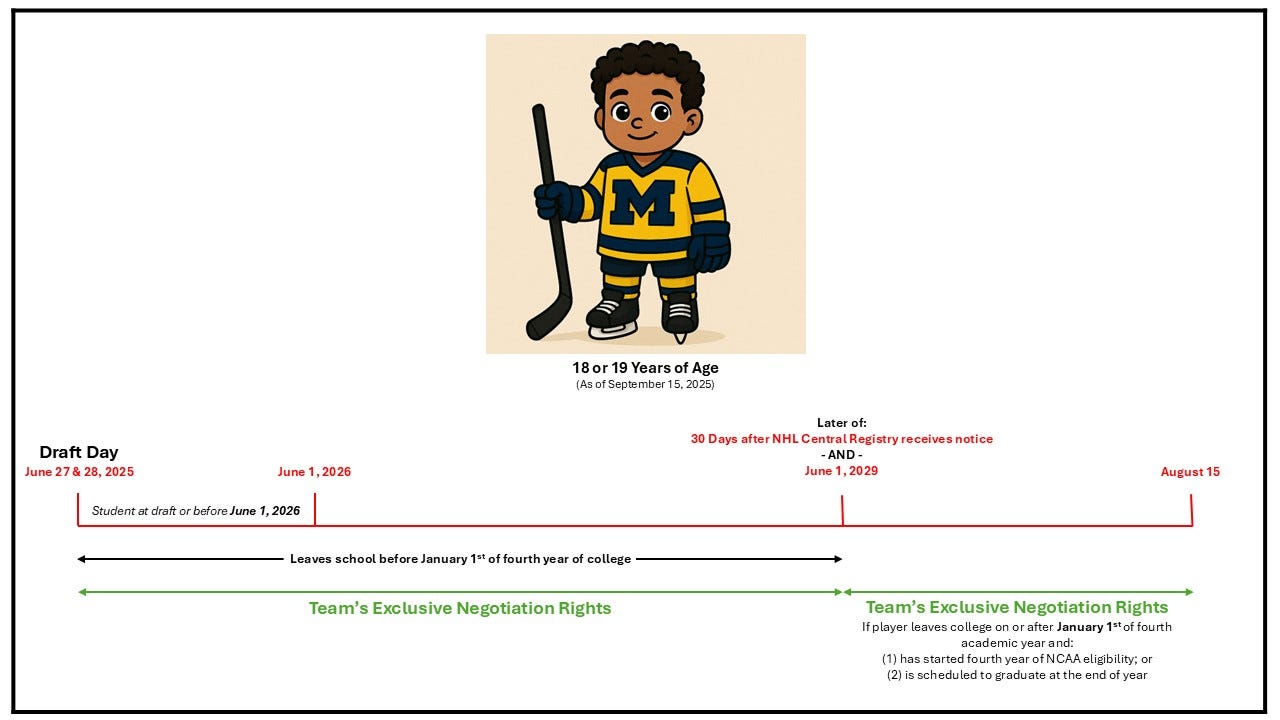
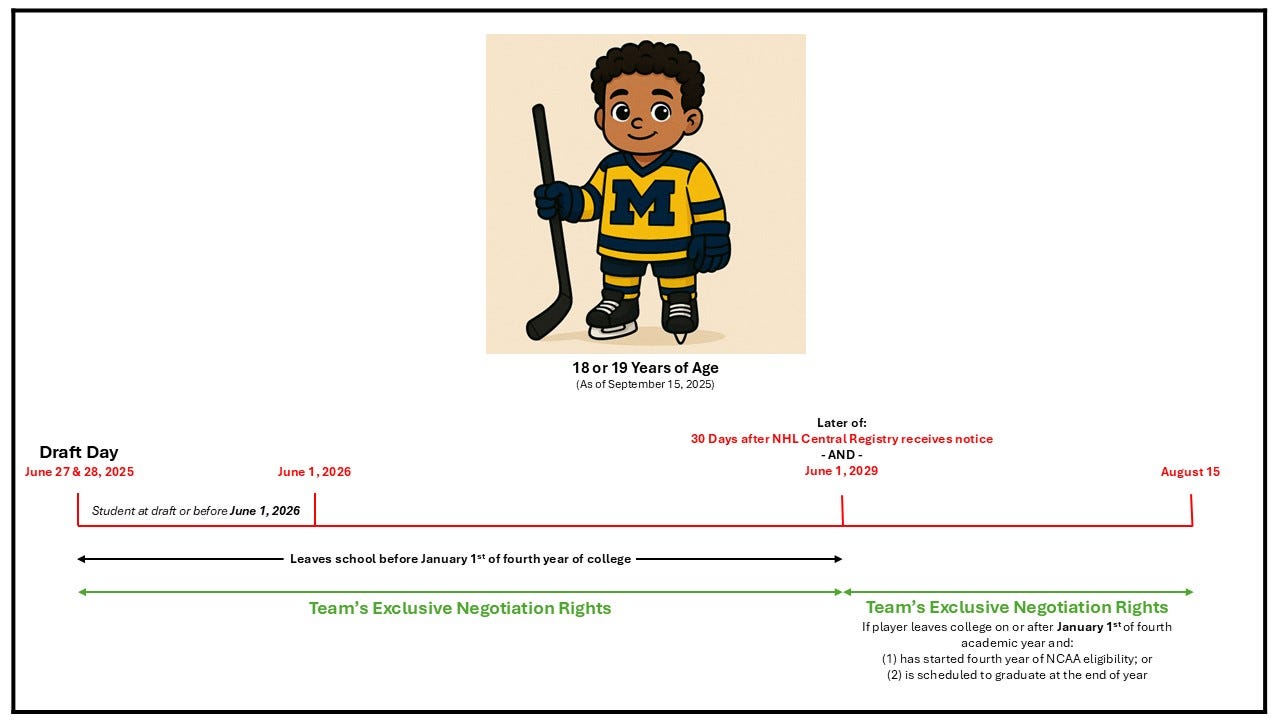
If a player is drafted at age 18 or 19 and is either a college student at the time of the draft or becomes one before the first June 1 following the draft, but does not stay in college through graduation, the team retains exclusive negotiation rights until the later of:
June 1 of the fourth year after the draft; or
30 days after NHL Central Registry is notified that the player is no longer a student
However, the team will retain exclusive negotiation rights until August 15 following the date the player leaves college if the player leaves college on or after January 1 of his fourth academic year and either:
has started his fourth year of NCAA eligibility; or
is scheduled to graduate that year.
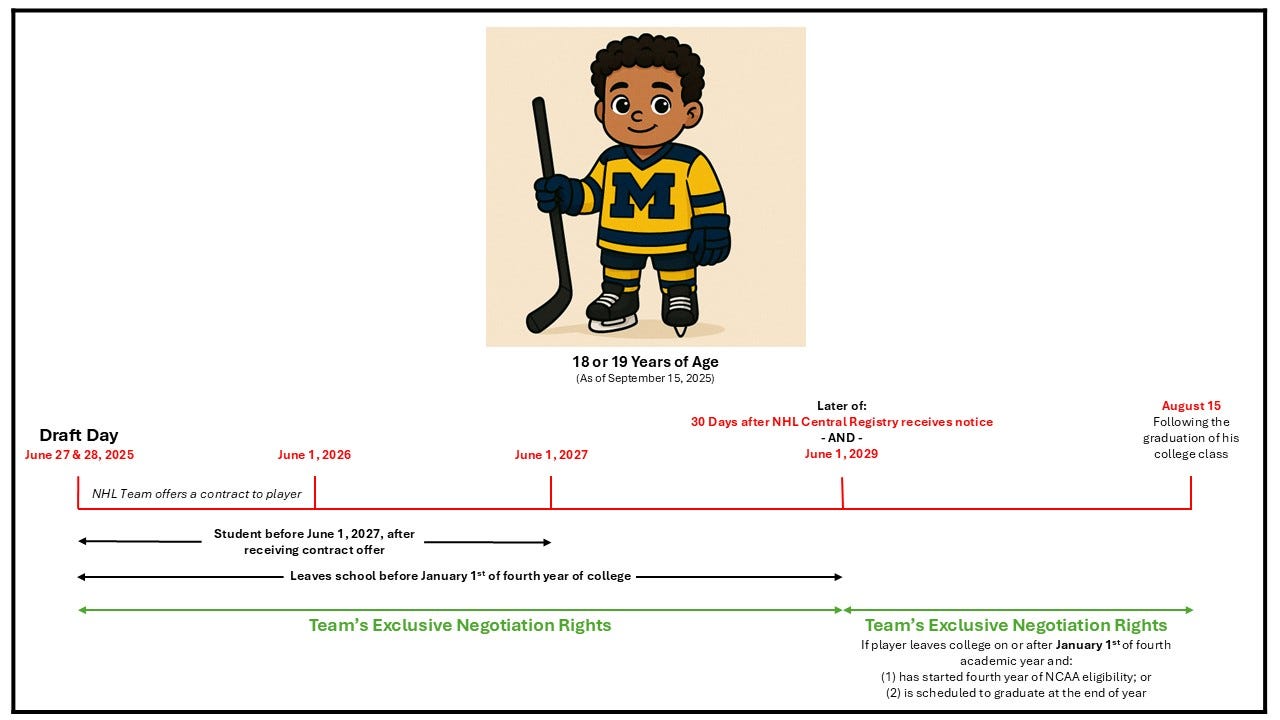
If a player is drafted at age 18 or 19, has received a contract offer from the team and becomes a college student before the second June 1 following the draft, but does not stay in college through graduation, the team retains exclusive negotiation rights until the later of:
June 1 of the fourth year after the draft; or
30 days after NHL Central Registry is notified that the player is no longer a student.
However, the team will retain exclusive negotiation rights until August 15 following the date the player leaves college if the player leaves college on or after January 1 of his fourth academic year and either:
has started his fourth year of NCAA eligibility; or
is scheduled to graduate that year.
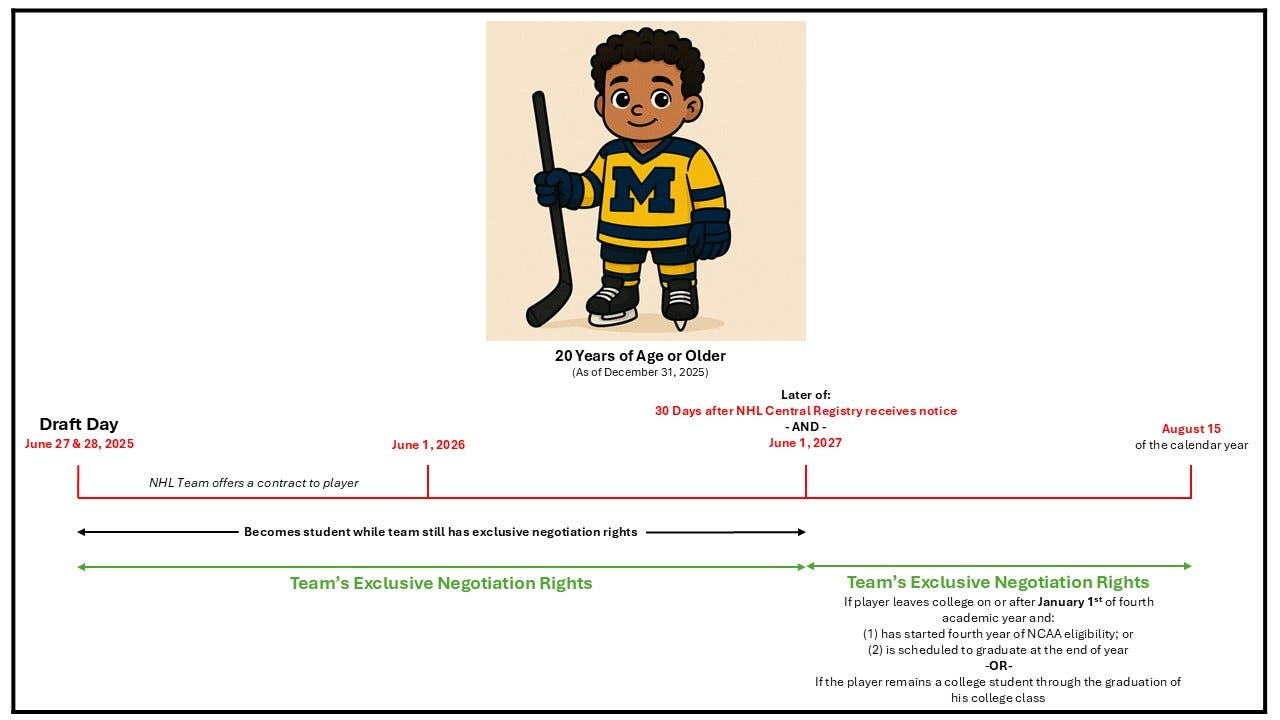
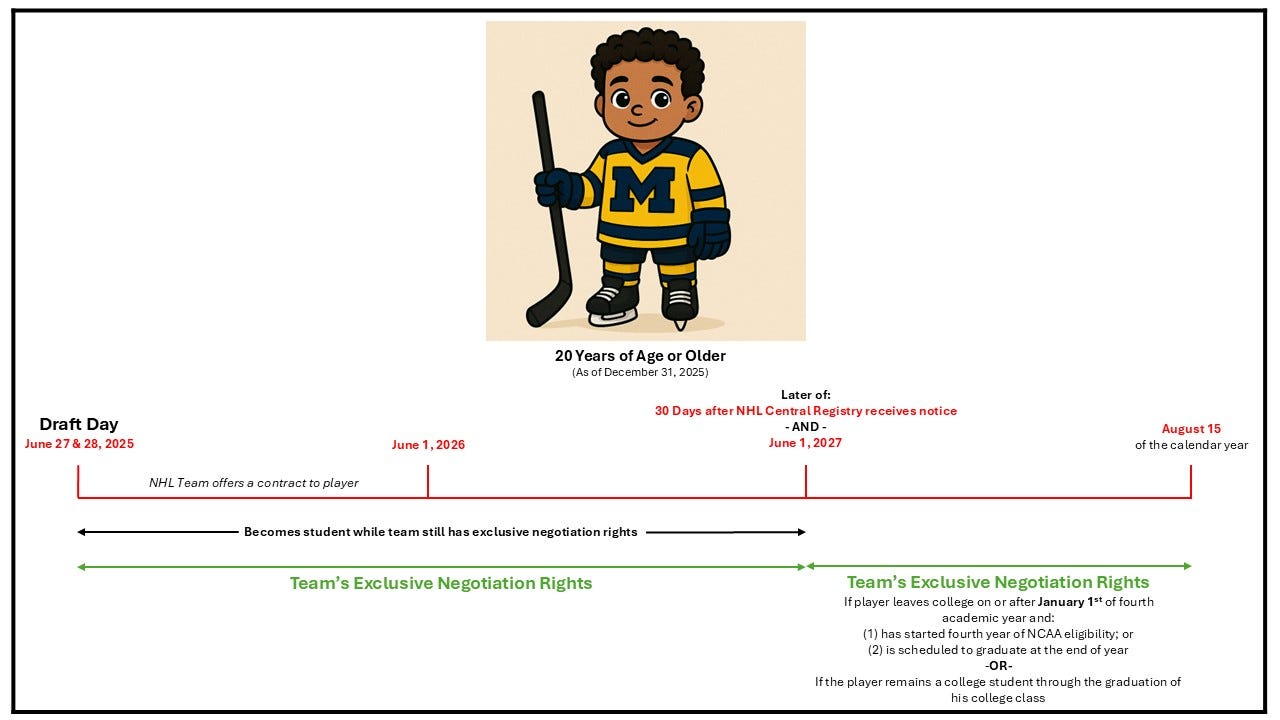
If a player is drafted at age 20 or older and is a college student at the time he is drafted or becomes a college student while the team still has exclusive negotiation rights, the team will retain exclusive negotiation rights until the later of:
June 1 of the second year after the draft; or
30 days after NHL Central Registry is notified that the player is no longer a student.
However, the team will retain exclusive negotiation rights until August 15 of the calendar year in the following circumstances:
the player is in his fourth year of college, has started his fourth year of NCAA eligibility and leaves college on or after January 1 of his fourth academic year;
the player is in his fourth year of college, is scheduled to graduate in that year and leaves college on or after January 1 of his fourth academic year; or
the player remains a college student through the graduation of his college class.
PLAYERS DRAFTED FROM OUTSIDE NORTH AMERICA
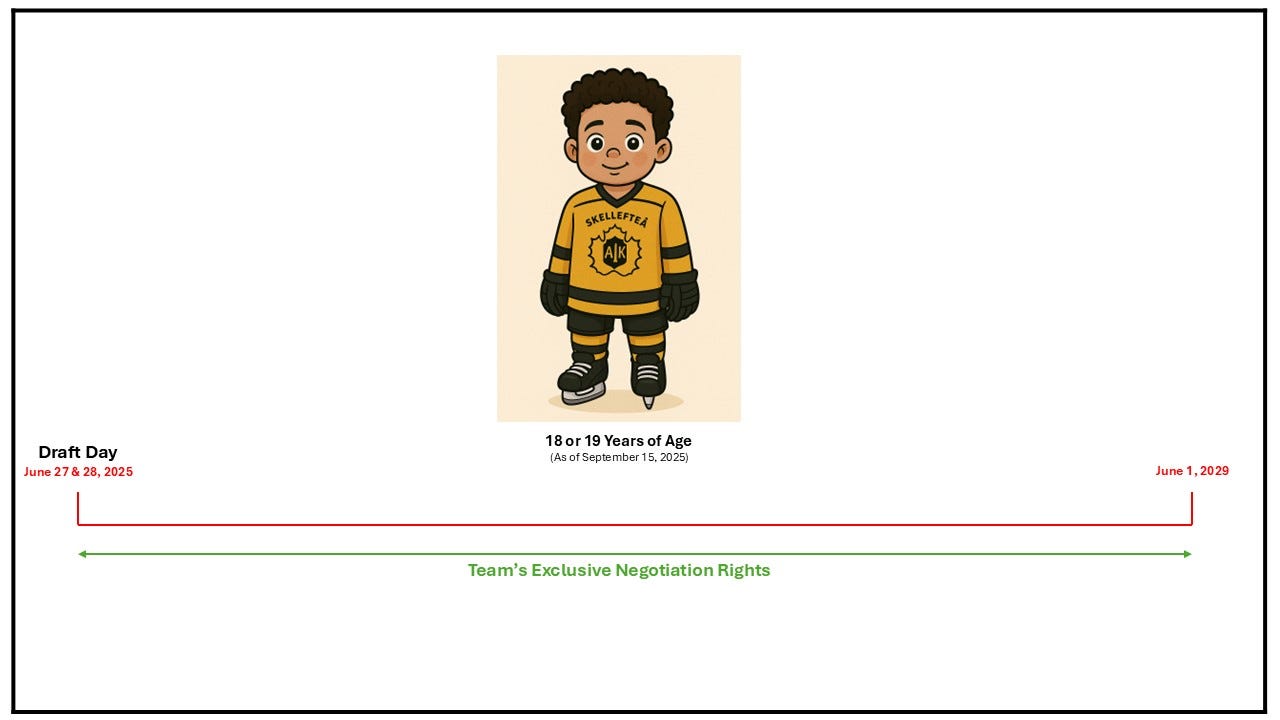
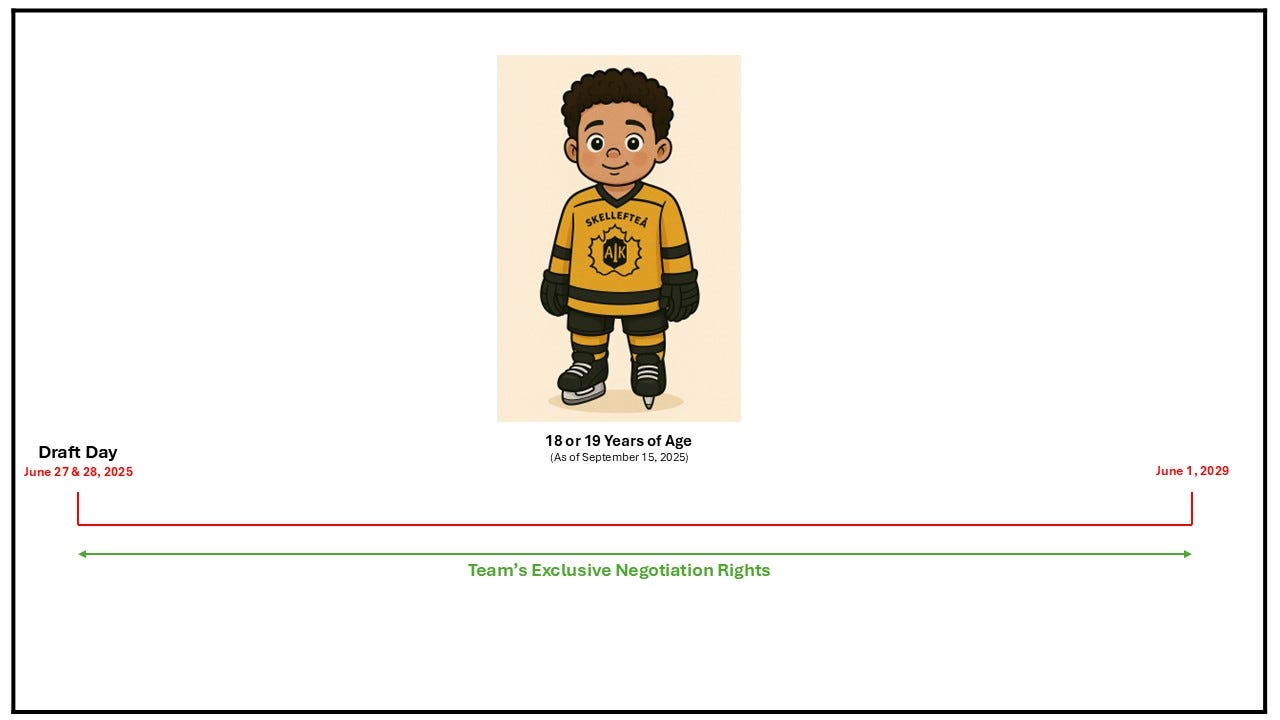
A team will retain the exclusive negotiation rights to a player that they have selected until June 1 of the fourth year following the draft if the player is drafted from a non-North American team at age 18 or 19.
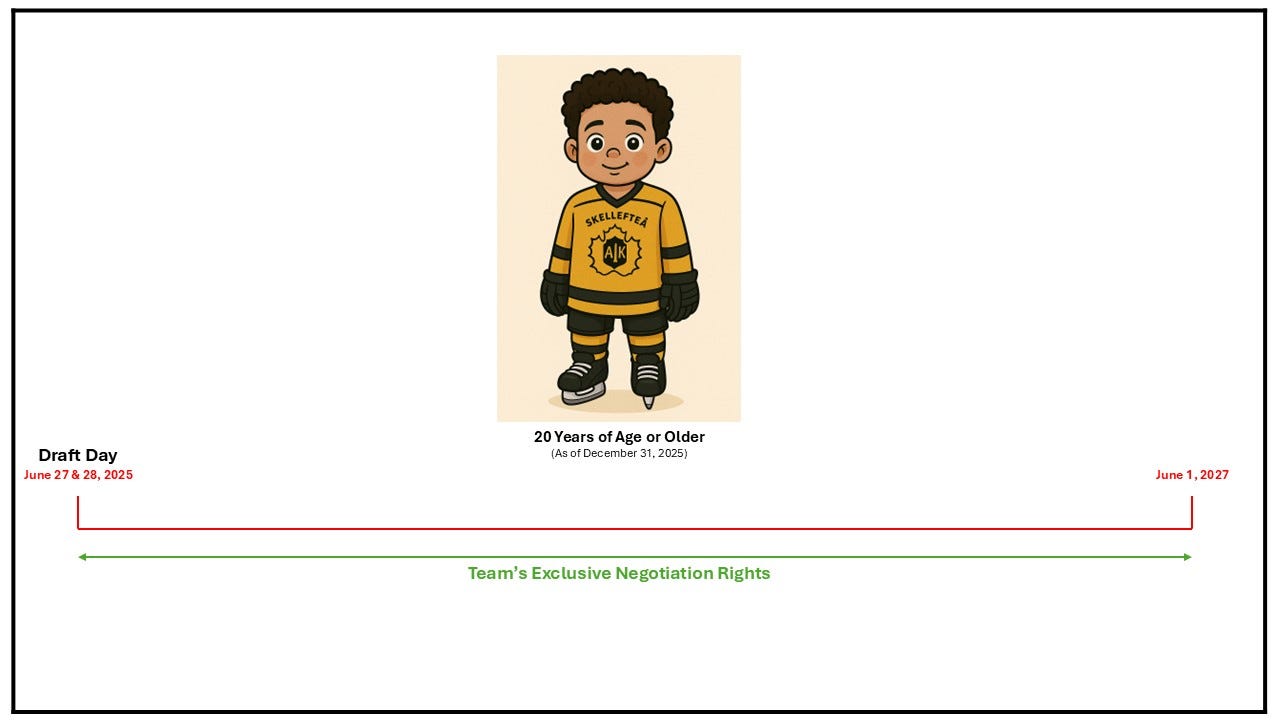
A team will retain the exclusive negotiation rights to a player that they have selected until June 1 of the second year following the draft if the player is drafted from a non-North American team at age 20 or older.
Understanding these timelines is crucial for teams managing organizational depth and for players choosing where to play before signing an NHL contact. This is especially important now that CHL players (from the WHL, OHL and QMJHL) can move to NCAA hockey, while some non-North American draftees are doing the same. In both cases, the team’s rights will be governed by the college hockey-specific rules outlined above, depending on when the player begins their college career.